
Wind turbine tower base load
The wind turbine tower base load is the downward force exerted at the base of a wind turbine tower due to the weight of the structure and the effects of wind.
How big is it?
20 MN · tower-base force
Tower-base force · representative
Typical recorded range: 10 MN to 50 MN.

A little perspective
Wind turbine tower base load vs Space Shuttle liftoff thrust: weight comparison
The liftoff thrust of a Space Shuttle is about 1.53 times the wind turbine tower base load.
FORCE
The wind turbine tower base load is the downward force exerted at the base of a wind turbine tower due to the weight of the structure and the effects of wind.
Space Shuttle liftoff thrust is the total upward force produced by its engines and boosters to launch the shuttle from Earth.
Measurements, assumptions & sources +
Wind turbine tower base load
Tower-base force: 20 MN; representative; range 10 MN–50 MN.
A representative 20 MN vertical force at the base of a utility-scale wind-turbine tower. Turbine size, dead weight, wind loading and structural design can move the load across the broad stated range.
Defined examples — our methodology
The marked tower-base force is calibrated. Unmeasured illustration details are representative.
Space Shuttle liftoff thrust
Approximate total liftoff thrust: 30.5 MN; approximate; range 30 MN–31 MN.
Approximately 30.5 MN at liftoff from two Solid Rocket Boosters plus three Space Shuttle Main Engines. Thrust changes through ascent and quoted totals vary with engine rating and atmospheric convention.
NASA Technical Reports Server — Space Shuttle transportation system
The marked approximate total liftoff thrust is calibrated. Unmeasured illustration details are representative.
Use the visual comparison to explore its scale, then check the measurements and sources.
Change your perspective
Put it next to…
Choose a suggestion to redraw the comparison, or open its page to learn what it is.
Why this measurement?
Why we use 20 MN
We compare the wind turbine tower base load. This is a representative comparison value; individual specimens or conditions can vary. The recorded range is 10 MN to 50 MN.
A representative 20 MN vertical force at the base of a utility-scale wind-turbine tower. Turbine size, dead weight, wind loading and structural design can move the load across the broad stated range.
The picture identifies the subject; the diagram compares the recorded values. How calibrated comparisons work →
Recorded properties
Dimensions and measurements
| Property | Selected value | Recorded range | Basis |
|---|---|---|---|
| 20 MN | 10 MN to 50 MN | representative |
Around this scale
Explore nearby values.
Compare examples with lower, similar and higher values. Each card names the measurement being compared.
Nearest lower valueGravity and forceFalcon 9 liftoff thrust7.6 MNLiftoff thrustFalcon 9 liftoff thrust is the total force produced by the Falcon 9 rocket's engines to lift it off the launch pad.Around the same scaleGravity and forceSaturn V liftoff thrust34 MNLiftoff thrustSaturn V liftoff thrust is the combined force generated by the Saturn V rocket's first stage engines during launch.Nearest higher valueGravity and forceSpace Shuttle liftoff thrust30.5 MNApproximate total liftoff thrustSpace Shuttle liftoff thrust is the total upward force produced by its engines and boosters to launch the shuttle from Earth.Sources and method
Want to check the number?
The source records and measurement method remain available for inspection.
There’s always another scale
Follow your curiosity.
GravitySpace Shuttle liftoff thrust30.5 MNSpace Shuttle liftoff thrust is the total upward force produced by its engines and boosters to launch the shuttle from Earth.GravitySaturn V liftoff thrust34 MNSaturn V liftoff thrust is the combined force generated by the Saturn V rocket's first stage engines during launch.GravitySLS Block 1 liftoff thrust39 MNSLS Block 1 liftoff thrust is the total propulsive force produced by the Space Launch System Block 1 rocket at launch.GravityFalcon 9 liftoff thrust7.6 MNFalcon 9 liftoff thrust is the total force produced by the Falcon 9 rocket's engines to lift it off the launch pad.GravityLaunch escape thrust of a Soyuz rocket4 MNThis is the force produced by the Soyuz rocket's launch escape system to rapidly move the crew capsule away in an emergency.GravitySuspension bridge main-cable tension200 MNSuspension bridge main-cable tension is the pulling force transmitted along a main cable to support the structure and its loads.GravityAircraft carrier buoyant support force1,000 MNAircraft carrier buoyant support force is the upward force from water that counteracts the weight of an aircraft carrier, enabling it to float.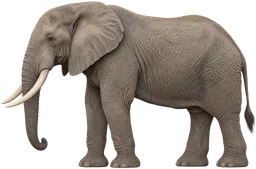 GravityWeight of a 5,000 kg elephant49.03 kNThis is the downward force exerted by gravity on an adult elephant.