
Human heart
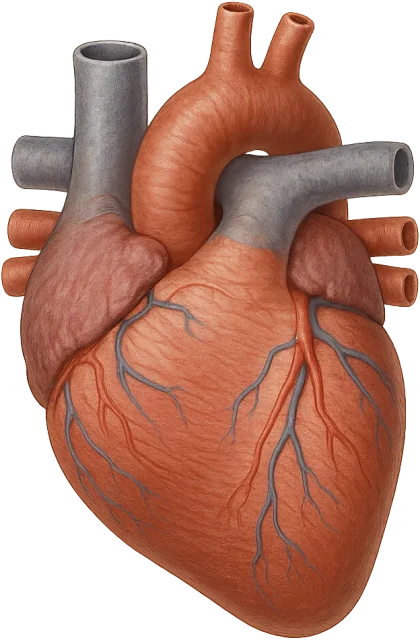
A human heart is a muscular organ that pumps blood through the circulatory system.
Also known as: heart, adult human heart
How big is it?
12 cm · representative long axis
Also 4.724 in
Representative long axis · defined specimen
Typical recorded range: 10 cm to 14 cm.
A little perspective
Human heart vs Pear: length comparison
The long axis of a human heart is about 1.09 times the fruit length of a pear.
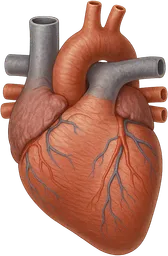
A human heart is a muscular organ that pumps blood through the circulatory system.
A pear is a sweet, edible fruit produced by trees of the genus Pyrus, commonly eaten fresh or used in cooking and baking.
Both rulers start at the same zero and share one linear scale. Artwork keeps its original proportions. Horizontal rulers compare the selected spans; vertical brackets also identify height on the artwork.
Measurements, assumptions & sources +
Human heart
Representative long axis: 12 cm; defined specimen; range 10 cm–14 cm.
A fist-sized adult heart represented by a 12 cm long-axis specimen. Cleveland Clinic gives an average adult mass of about 10 oz (283 g); individual anatomy varies.
Defined examples — our methodology
The marked representative long axis is calibrated. Unmeasured illustration details are representative.
Pear
Defined fruit length: 11 cm; defined specimen; range 8 cm–14 cm.
A defined medium pear 11 cm long using the USDA 178 g reference fruit mass. Cultivar and ripeness vary; the stem and leaf are excluded from calibrated fruit length.
USDA FoodData Central — raw fruit portions
The marked defined fruit length is calibrated. Unmeasured illustration details are representative.
Use the visual comparison to explore its scale, then check the measurements and sources.
Change your perspective
Put it next to…
Choose a suggestion to redraw the comparison, or open its page to learn what it is.
Why this measurement?
Why we use 12 cm
We compare the long axis of a human heart. This is an illustrative comparison value, not a claim that every example is the same. The recorded range is 10 cm to 14 cm.
A fist-sized adult heart represented by a 12 cm long-axis specimen. Cleveland Clinic gives an average adult mass of about 10 oz (283 g); individual anatomy varies.
The marked vertical span follows the measured feature, not the edges of the image. How calibrated comparisons work →
Recorded properties
Dimensions and measurements
| Property | Selected value | Recorded range | Basis |
|---|---|---|---|
| 12 cm | 10 cm to 14 cm | defined specimen | |
| 283 g | 230 g to 340 g | representative |
Around this scale
Explore nearby values.
Compare examples with lower, similar and higher values. Each card names the measurement being compared.
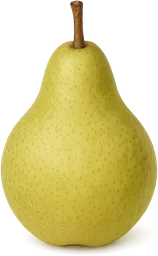 Nearest lower valueEveryday objectsPear11 cmDefined fruit lengthA pear is a sweet, edible fruit produced by trees of the genus Pyrus, commonly eaten fresh or used in cooking and baking.
 Around the same scaleLiving thingsEarthworm12 cmBody lengthAn earthworm is a segmented invertebrate that lives in soil and aids in decomposing organic material.
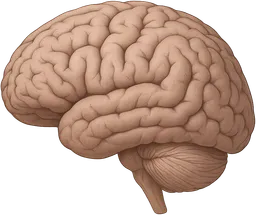 Nearest higher valuePeople and human anatomyHuman brain15 cmRepresentative front-to-back lengthThe human brain is the organ that processes sensory information and coordinates thought, memory, movement and many body functions.
Sources and method
Want to check the number?
The source records and measurement method remain available for inspection.
- Cleveland Clinic — Heart anatomyThe adult heart is about fist-sized and averages about 10 oz (283 g); dimensions vary by person.
- Defined examples — our methodology
There’s always another scale
Follow your curiosity.
 PeopleHuman1.75 mA human is a primate of the species Homo sapiens, distinguished by habitual upright walking, language and complex tool use.
 TimeHeartbeat1 sA heartbeat is the regular contraction of the heart that pumps blood through the body.Everyday thingsPear11 cmA pear is a sweet, edible fruit produced by trees of the genus Pyrus, commonly eaten fresh or used in cooking and baking.
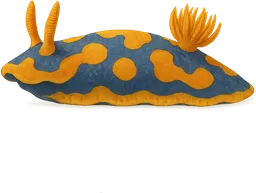 Living thingsNudibranch10 cmA nudibranch is a soft-bodied marine mollusc, often brightly coloured, commonly known as a sea slug.PeopleHuman brain15 cmThe human brain is the organ that processes sensory information and coordinates thought, memory, movement and many body functions.
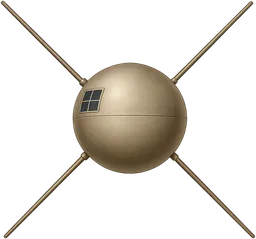 SpaceVanguard 116.5 cmVanguard 1 is an early American satellite launched in 1958, notable for being the oldest human-made object still in orbit.
 SportShuttlecock8.5 cmA shuttlecock is a feathered projectile used in badminton, designed to be struck by rackets.
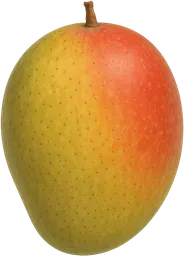 Everyday thingsMango14 cmA mango is the edible, fleshy fruit of the tropical tree Mangifera indica, widely cultivated for its sweet flavour.