
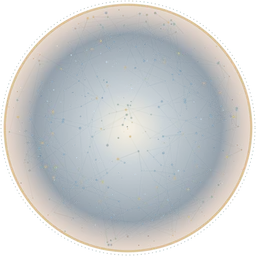
10 gigaparsecs
10 GpcLength · definition
The quantity is exact as entered. Comparisons use the clearly stated specimen, model or nominal measurement.

Length & distance
Deep space
The quantity is exact as entered.
The observable universe is the region from which light or other signals have had time to reach us since the early universe.
Both rulers start at the same zero and share one linear scale. Artwork keeps its original proportions. A ruler represents the selected distance or a measurement not visible in this view.
A little perspective
The diameter of the observable universe is about 2.82 times 10 gigaparsecs.
Length: 10 Gpc; definition.
The quantity is exact as entered. Comparisons use the clearly stated specimen, model or nominal measurement.
Diameter: 28.21 Gpc; cosmological estimate.
About 92 billion light-years across in present-day comoving distance. Space expanded while the light travelled. The 13.8-billion-year age is a time, not its radius divided by light speed. The total universe may be far larger, possibly infinite.
NASA — How big is space? (2025)
The marked diameter is calibrated. Unmeasured illustration details are representative.
Measurement details
Compare 10 gigaparsecs with the diameter of the observable universe. The notes below explain how each value was chosen.
Length · definition
The quantity is exact as entered. Comparisons use the clearly stated specimen, model or nominal measurement.
Diameter · cosmological estimate
About 92 billion light-years across in present-day comoving distance. Space expanded while the light travelled. The 13.8-billion-year age is a time, not its radius divided by light speed. The total universe may be far larger, possibly infinite.
The diagram uses the recorded measurements. Details outside the marked spans do not set the scale.
This comparison follows the selected length only; other dimensions may differ.
Change your perspective
Choose a suggestion to redraw the comparison, or open its page to learn what it is.
A little smaller. A little larger.