Home / Compare / 5 ml measuring teaspoon vs 15 ml measuring tablespoon 5 ml measuring teaspoon vs 15 ml measuring tablespoon: volume comparison A 15 ml measuring tablespoon has about 3 times the volume of a 5 ml measuring teaspoon. Selected basis: an example for 5 ml measuring teaspoon; an example for 15 ml measuring tablespoon; approximate values.
5 ml measuring teaspoon Change → 15 ml measuring tablespoon Change → MeasurementVolume & capacity PropertiesVolume
5 ml measuring teaspoon Volume
15 ml measuring tablespoon Volume Scale Linear ✓ Logarithmic ✓ Too small to see at this scale. The ring marks its true-scale position, not its volume. The shape has not been enlarged.
Too small to see at this scale. The ring marks its true-scale position, not its volume. The shape has not been enlarged.
These are equal-volume cubes. Edge lengths grow with the cube root of capacity; the cubes do not depict container exteriors.
In perspective 3× times Measurements, assumptions & sources 5 ml - Volume; example.
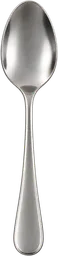
A measuring teaspoon is used to portion small amounts of ingredients in cooking or medicine.
Defined 5 ml capacity. Actual containers, servings and fills vary. Outer shape is not used to calculate capacity.
Defined examples — our methodology 15 ml - Volume; example.
A measuring tablespoon is used to portion larger amounts of ingredients in recipes.
Defined 15 ml capacity. Actual containers, servings and fills vary. Outer shape is not used to calculate capacity.
Defined examples — our methodology Share comparison ↗
Retry update
Retry
5 ml measuring teaspoon and 15 ml measuring tablespoon, compared by volume. The visual is a static, shareable rendering of the interactive comparison. Like seeing things in perspective?
Help expand the encyclopedia. Support more calibrated illustrations, comparisons and ways to explore scale.
Help expand the encyclopedia → Got a good eye for scale?
Try matching it yourself. Play Scale It → Every canonical measurement and diagram is available without JavaScript. Enable it to search, change properties, compare your own values or move through the scale explorer.