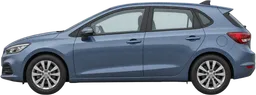
Family car
A family car is a motor vehicle designed to carry several passengers and their belongings.
4.5 mLengthEveryday quantities
What are they, and what does the difference actually look like?
Two things. One honest scale.
Meet the pair
A family car is a motor vehicle designed to carry several passengers and their belongings.
4.5 mLength
A high-speed train is a passenger train designed to travel much faster than conventional rail services, often between major cities.
200 mLengthHigh-speed train has about 44.4 times the length of Family car.
A 4.5 m long car with 1,500 kg mass; vehicle models and loading vary.
Defined examples — our methodology
The marked length is calibrated. Unmeasured illustration details are representative.
A defined 200 m trainset, 400 tonne mass and 300 km/h cruise example.
Defined examples — our methodology
The marked length is calibrated. Unmeasured illustration details are representative.
Change the comparison
Measurement details
The visual compares length with length. The records below preserve each value’s basis and caveats.
Length · example
A 4.5 m long car with 1,500 kg mass; vehicle models and loading vary.
Length · example
A defined 200 m trainset, 400 tonne mass and 300 km/h cruise example.
The labelled spans and stored measurements determine the scale; unmeasured illustration details do not.
There’s always another scale
TransportFamily car4.5 mA family car is a motor vehicle designed to carry several passengers and their belongings.TransportHigh-speed train200 mA high-speed train is a passenger train designed to travel much faster than conventional rail services, often between major cities. PeopleHuman1.75 mA human is a primate of the species Homo sapiens, distinguished by habitual upright walking, language and complex tool use.
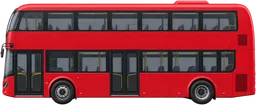 TransportDouble-decker bus11 mA double-decker bus is a passenger vehicle with two levels, used for public transport.
Side by side