
UK 50p coin
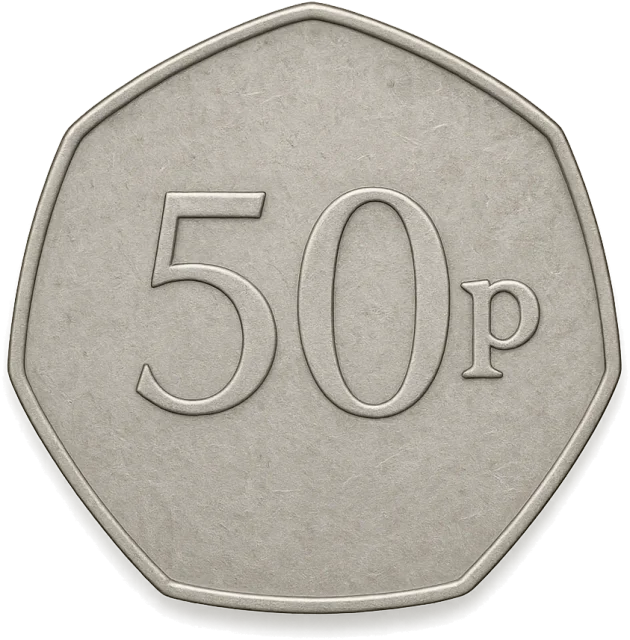
A UK 50p coin is the seven-sided fifty-pence denomination of the decimal pound sterling circulation coinage.
Also known as: British 50p coin, fifty pence coin
How big is it?
2.73 cm · specified maximum diameter
Also 1.075 in
Specified maximum diameter · specified
Format: Smaller format, cupro-nickel. UK 50p coin: 27.3 mm (1.075 in) maximum span, 1.78 mm (0.070 in) thick, and 8 g in mass. Diameter measures across the face, not the edge thickness.
Check UK 50p coin material and older-format differences. Compare UK and US coin dimensions.
A little perspective
UK 50p coin vs UK £2 coin: diameter comparison
The diameter of a UK £2 coin is about 1.04 times the maximum diameter of a UK 50p coin.
A UK 50p coin is the seven-sided fifty-pence denomination of the decimal pound sterling circulation coinage.
A UK £2 coin is the bimetallic two-pound denomination of the pound sterling circulation coinage.
Both rulers start at the same zero and share one linear scale. Artwork keeps its original proportions.
Measurements, assumptions & sources +
UK 50p coin
Specified maximum diameter: 2.73 cm; specified.
Smaller cupro-nickel UK 50p introduced on 1 September 1997: 27.3 mm maximum span, 1.78 mm thickness and 8 g mass. The larger predecessor was withdrawn in 1998, not on the introduction date. Its equilateral-curve heptagon has constant breadth.
Royal Mint — 50p specifications and format history
The marked specified maximum diameter is calibrated. Unmeasured illustration details are representative.
UK £2 coin
Specified diameter: 2.84 cm; specified.
Bimetallic UK two-pound circulation format: 28.4 mm diameter, 2.5 mm thickness and 12 g mass. Bimetallic means an outer ring and inner disc; earlier single-metal or collector issues are not the comparison input.
Royal Mint — bimetallic £2 specifications
The marked specified diameter is calibrated. Unmeasured illustration details are representative.
Use the visual comparison to explore its scale, then check the measurements and sources.
Change your perspective
Put it next to…
Choose a suggestion to redraw the comparison, or open its page to learn what it is.
Why this measurement?
Why we use 2.73 cm
We compare the maximum diameter of a UK 50p coin. This value follows a stated specification; check its scope in the notes.
Smaller cupro-nickel UK 50p introduced on 1 September 1997: 27.3 mm maximum span, 1.78 mm thickness and 8 g mass. The larger predecessor was withdrawn in 1998, not on the introduction date. Its equilateral-curve heptagon has constant breadth.
The marked horizontal span follows the measured feature, not the edges of the image. How calibrated comparisons work →
Recorded properties
Dimensions and measurements
| Property | Selected value | Recorded range | Basis |
|---|---|---|---|
| 27.3 mm (1.075 in) | Not recorded | specified - Smaller format, cupro-nickel | |
| 1.78 mm (0.070 in) | Not recorded | specified - Smaller format, cupro-nickel | |
| 8 g | Not recorded | specified - Smaller format, cupro-nickel |
Around this scale
Explore nearby values.
Compare examples with lower, similar and higher values. Each card names the measurement being compared.
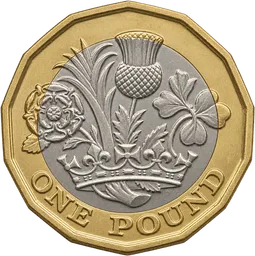 Nearest lower valueEveryday objects£1 coin2.343 cmSpecified maximum diameterA £1 coin is a twelve-sided British coin used as standard currency in the United Kingdom.
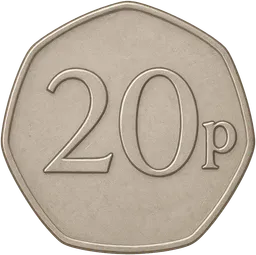 Around the same scaleEveryday objectsUK 20p coin2.14 cmSpecified maximum diameterA UK 20p coin is the seven-sided twenty-pence denomination of the decimal pound sterling circulation coinage.
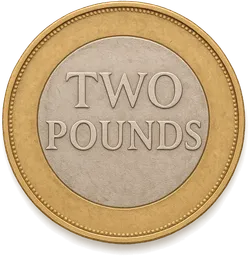 Nearest higher valueEveryday objectsUK £2 coin2.84 cmSpecified diameterA UK £2 coin is the bimetallic two-pound denomination of the pound sterling circulation coinage.
Sources and method
Want to check the number?
The source records and measurement method remain available for inspection.
- Royal Mint — 50p specifications and format historySmaller format introduced 1 September 1997, larger format demonetised 1998: 27.3 mm maximum span, 1.78 mm thickness and 8 g.
There’s always another scale
Follow your curiosity.
Everyday thingsUK 20p coin2.14 cmA UK 20p coin is the seven-sided twenty-pence denomination of the decimal pound sterling circulation coinage.Everyday things£1 coin2.343 cmA £1 coin is a twelve-sided British coin used as standard currency in the United Kingdom.Everyday thingsUK £2 coin2.84 cmA UK £2 coin is the bimetallic two-pound denomination of the pound sterling circulation coinage.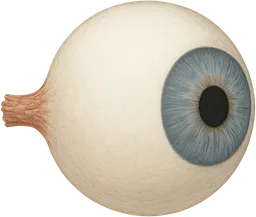 PeopleHuman eyeball2.4 cmThe human eyeball is the globe-shaped organ that receives light and begins the process of vision.
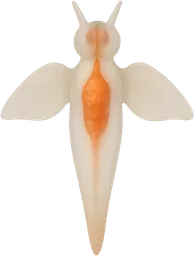 Living thingsSea angel2 cmA sea angel is a small, transparent swimming sea slug with wing-like appendages, found in cold ocean waters.
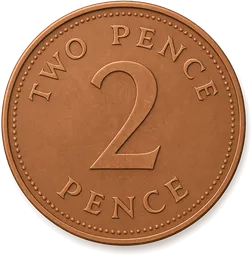 Everyday thingsUK 2p coin2.59 cmA UK 2p coin is the two-pence denomination of the decimal pound sterling circulation coinage.
 SportSquash ball4 cmA squash ball is a small, hollow rubber ball used in the sport of squash.
 Living thingsVenus flytrap3 cmThe Venus flytrap is a carnivorous plant that captures insects with its specialised hinged leaves.