
Stonehenge trilithon
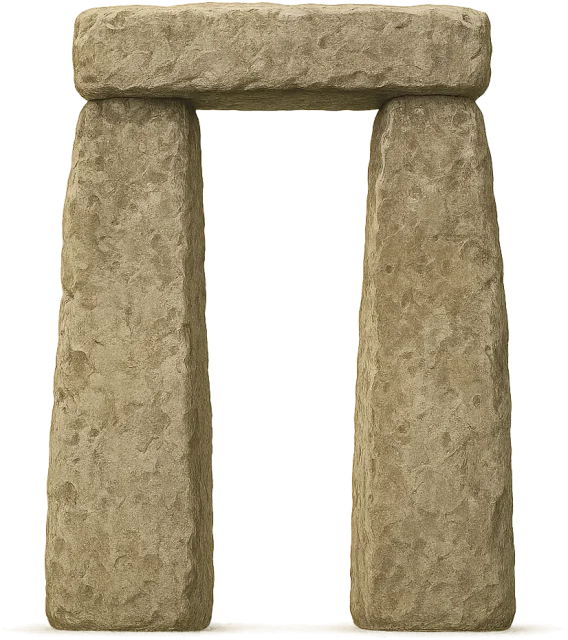
A Stonehenge trilithon is a prehistoric monument feature consisting of two upright stones supporting a horizontal lintel at Stonehenge.
Also known as: Stonehenge great trilithon
How big is it?
7.3 m · approximate reconstructed height
Also 23.95 ft
Approximate reconstructed height · approximate
Typical recorded range: 6.7 m to 7.5 m.
A little perspective
Stonehenge trilithon vs Apollo lunar module: height comparison
The reconstructed height of a Stonehenge trilithon is about 1.04 times the overall height of the Apollo lunar module.
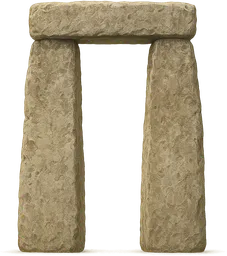
A Stonehenge trilithon is a prehistoric monument feature consisting of two upright stones supporting a horizontal lintel at Stonehenge.
The Apollo lunar module was a two-stage spacecraft used by NASA to land astronauts on the Moon and return them to lunar orbit during the Apollo missions.
Both rulers start at the same zero and share one linear scale. Artwork keeps its original proportions. Horizontal rulers compare the selected spans; vertical brackets also identify height on the artwork.
Measurements, assumptions & sources +
Stonehenge trilithon
Approximate reconstructed height: 7.3 m; approximate; range 6.7 m–7.5 m.
A representative great trilithon at Stonehenge reconstructed to approximately 7.3 m high and 6.5 m wide. Fallen, incomplete stones and uncertain original surfaces make the dimensions approximate.
The marked approximate reconstructed height is calibrated. Unmeasured illustration details are representative.
Apollo lunar module
Overall height: 7.04 m; specified.
The Apollo lunar module was about 7.04 m high. The 15,103 kg value is the Apollo 11 lunar module at separation, including descent and ascent stages; mission configurations differed.
NASA — Apollo 11 mission report
The marked overall height is calibrated. Unmeasured illustration details are representative.
Use the visual comparison to explore its scale, then check the measurements and sources.
Change your perspective
Put it next to…
Choose a suggestion to redraw the comparison, or open its page to learn what it is.
Why this measurement?
Why we use 7.3 m
We compare the reconstructed height of a Stonehenge trilithon. This is an estimate; check the notes for its rounding and uncertainty. The recorded range is 6.7 m to 7.5 m.
A representative great trilithon at Stonehenge reconstructed to approximately 7.3 m high and 6.5 m wide. Fallen, incomplete stones and uncertain original surfaces make the dimensions approximate.
The marked vertical span follows the measured feature, not the edges of the image. How calibrated comparisons work →
Recorded properties
Dimensions and measurements
| Property | Selected value | Recorded range | Basis |
|---|---|---|---|
| 7.3 m | 6.7 m to 7.5 m | approximate | |
| 6.5 m | 6 m to 7 m | approximate |
Around this scale
Explore nearby values.
Compare examples with lower, similar and higher values. Each card names the measurement being compared.
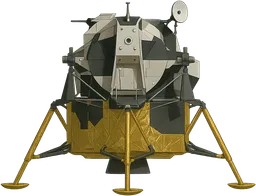 Nearest lower valuePlanets, moons and spaceApollo lunar module7.04 mOverall heightThe Apollo lunar module was a two-stage spacecraft used by NASA to land astronauts on the Moon and return them to lunar orbit during the Apollo missions.
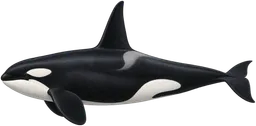 Around the same scaleLiving thingsOrca7 mLengthThe orca, or killer whale, is a highly intelligent marine mammal in the dolphin family that hunts in coordinated groups.
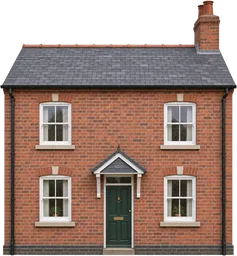 Nearest higher valueBuildings and structuresTwo-storey house8 mHeightA two-storey house is a residential building with two levels for living space.
Sources and method
Want to check the number?
The source records and measurement method remain available for inspection.
- English Heritage — StonehengeGreat trilithon arrangement, stone dimensions and reconstructed monument context.
There’s always another scale
Follow your curiosity.
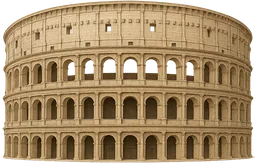 Built worldColosseum189 mThe Colosseum is an ancient Roman amphitheatre in Rome built for public events such as gladiatorial contests.SpaceApollo lunar module7.04 mThe Apollo lunar module was a two-stage spacecraft used by NASA to land astronauts on the Moon and return them to lunar orbit during the Apollo missions.
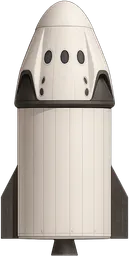 TransportCrew Dragon spacecraft8.1 mCrew Dragon spacecraft is a reusable capsule developed by SpaceX to transport astronauts to and from low Earth orbit.
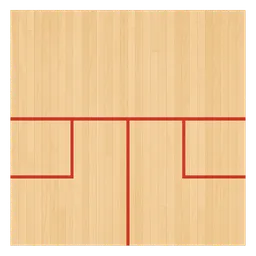 SportSquash court9.75 mA squash court is an enclosed room with four walls used for playing the sport of squash.Living thingsOrca7 mThe orca, or killer whale, is a highly intelligent marine mammal in the dolphin family that hunts in coordinated groups.Built worldTwo-storey house8 mA two-storey house is a residential building with two levels for living space.
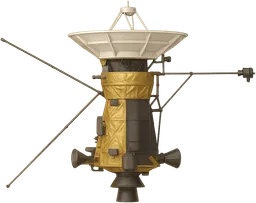 SpaceCassini spacecraft6.8 mThe Cassini spacecraft was a NASA probe launched to study Saturn and its moons, carrying scientific instruments and the Huygens lander.
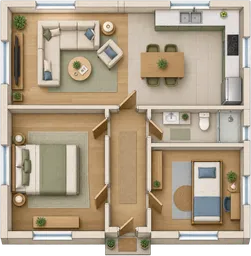 Everyday things100 m² home10 mA home is a dwelling where people live, providing shelter and a place for daily activities.