
Samovar urn
A samovar urn is a traditional metal vessel used to heat and serve tea, especially in Russian and Central Asian cultures.
Also known as: tea samovar
How big is it?
5 L · defined nominal capacity
Also 1.321 US gal
Defined nominal capacity · defined specimen
Typical recorded range: 3 L to 8 L.
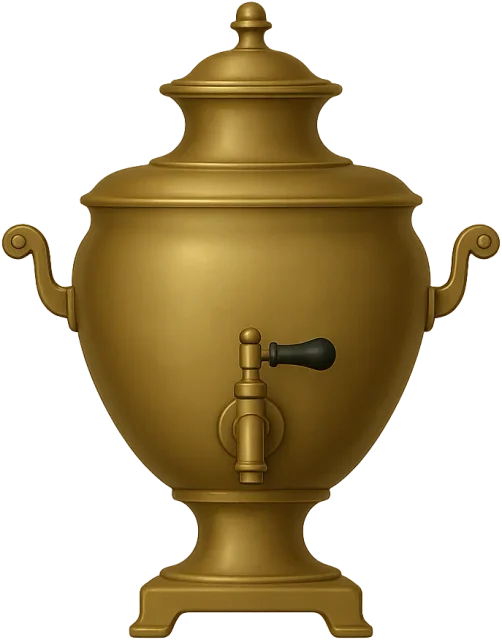
A little perspective
Samovar urn vs 5 litre watering can: volume comparison
The nominal capacity of a samovar urn is approximately equal to the volume of a 5 litre watering can.
A samovar urn is a traditional metal vessel used to heat and serve tea, especially in Russian and Central Asian cultures.
Too small to see at this scale. The ring marks its true-scale position, not its volume. The shape has not been enlarged.
Too small to see at this scale. The ring marks its true-scale position, not its volume. The shape has not been enlarged.
Measurements, assumptions & sources +
Samovar urn
Defined nominal capacity: 5 L; defined specimen; range 3 L–8 L.
A defined five-litre brass samovar, 50 cm tall and 5 kg empty. Decorative and commercial samovars vary widely.
Defined examples — our methodology
The marked defined nominal capacity is calibrated. Unmeasured illustration details are representative.
5 litre watering can
Volume: 5 L; example.
Defined 5 litre capacity. Actual containers, servings and fills vary. Outer shape is not used to calculate capacity.
Defined examples — our methodology
The marked volume is calibrated. Unmeasured illustration details are representative.
Use the visual comparison to explore its scale, then check the measurements and sources.
Change your perspective
Put it next to…
Choose a suggestion to redraw the comparison, or open its page to learn what it is.
Why this measurement?
Why we use 5 L
We compare the nominal capacity of a samovar urn. This is an illustrative comparison value, not a claim that every example is the same. The recorded range is 3 L to 8 L.
A defined five-litre brass samovar, 50 cm tall and 5 kg empty. Decorative and commercial samovars vary widely.
The picture identifies the subject; the diagram compares the recorded values. How calibrated comparisons work →
Recorded properties
Dimensions and measurements
| Property | Selected value | Recorded range | Basis |
|---|---|---|---|
| 5 L | 3 L to 8 L | defined specimen | |
| 50 cm | 40 cm to 70 cm | defined specimen | |
| 5 kg | 3 kg to 9 kg | defined specimen |
Around this scale
Explore nearby values.
Compare examples with lower, similar and higher values. Each card names the measurement being compared.
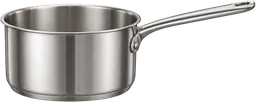 Nearest lower valueContainers and capacity3 litre saucepan3 LVolumeA saucepan is a deep pan with a handle, used for cooking or boiling food on a hob.
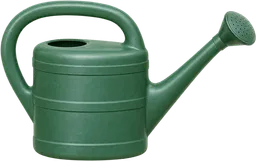 Around the same scaleContainers and capacity5 litre watering can5 LVolumeA watering can is used to pour water onto plants.
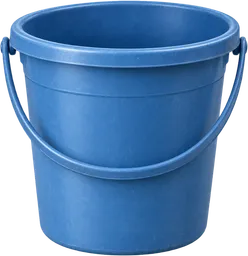 Nearest higher valueContainers and capacity10 litre bucket10 LVolumeA bucket is a handled container used for carrying liquids or loose materials.
Sources and method
Want to check the number?
The source records and measurement method remain available for inspection.
There’s always another scale
Follow your curiosity.
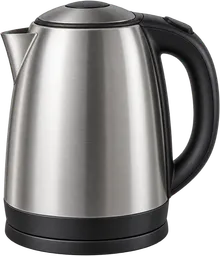 Containers1.7 litre kettle1.7 LA kettle is used to heat water, often for making tea or coffee.
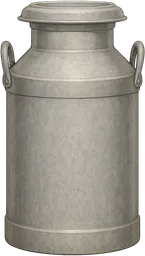 ContainersMilk churn40 LA milk churn is a traditional metal container used for transporting and storing milk from farms to dairies.Containers5 litre watering can5 LA watering can is used to pour water onto plants.Containers3 litre saucepan3 LA saucepan is a deep pan with a handle, used for cooking or boiling food on a hob.Containers10 litre bucket10 LA bucket is a handled container used for carrying liquids or loose materials.
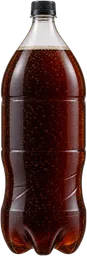 Containers2 litre bottle2 LA soda bottle is used to contain and serve carbonated soft drinks.
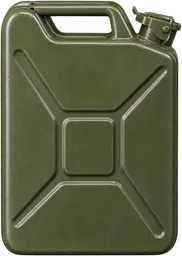 Containers20 litre jerrycan20 LA jerrycan is a sturdy container for storing and transporting liquids such as fuel or water.
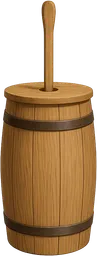 ContainersButter churn20 LA butter churn is a vessel with a mechanism for agitating cream to produce butter, traditionally operated by hand.